
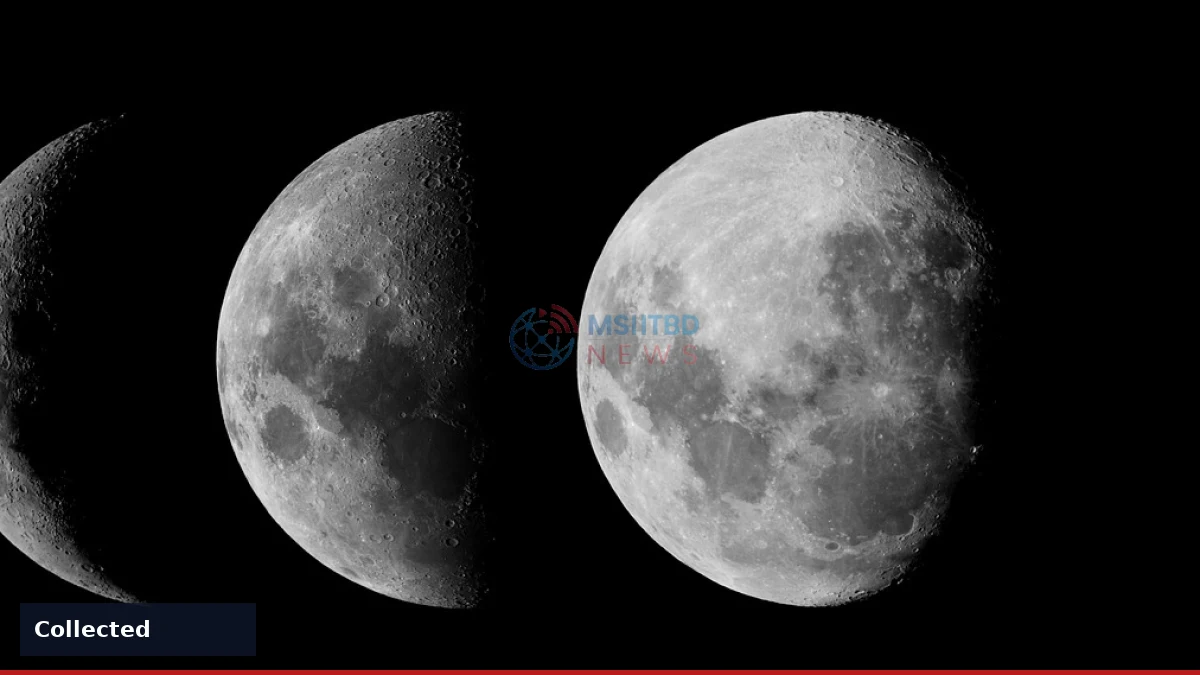
A brilliant full Moon will dominate the sky just after midnight Eastern Time on October 26, 2026, offering a chance to spot familiar craters and even historic landing sites.
Key points
- The full Moon peaks just after midnight ET on Oct. 26, 2026, visible across the United States.
- Naked‑eye observers can spot Copernicus, Tycho and Mare Crisium; binoculars add Endymion, Alphonsus and Grimaldi; telescopes reveal Apollo landing sites and the Caucasus Mountains.
- The following full Moon will occur on Nov. 24, 2026.
- Lunar phases repeat on a 29.5‑day cycle, producing eight distinct appearances.
According to NASA’s Daily Moon Guide, the Moon will be in its full‑phase on Monday, Oct. 26, 2026, with the entire illuminated face visible from Earth.
The peak of illumination occurs just after midnight ET, meaning observers on the U.S. East Coast will see the Moon become full shortly after 12 a.m., while those farther west will experience the peak during the evening of Oct. 25.
When the Moon will be full
With the naked eye you should be able to locate prominent features such as Copernicus Crater, Tycho Crater and the Mare Crisium. Binocular users can add Endymion, Alphonsus and the Grimaldi Basin to their checklist, and telescopes reveal the Apollo 15 and 16 landing sites as well as the rugged Caucasus Mountains.
The next full Moon after this event is scheduled for Nov. 24, 2026, giving sky‑watchers another opportunity to enjoy a bright lunar night within a month.
What you can see without a telescope
The Moon completes a full orbit around Earth roughly every 29.5 days, cycling through eight phases—from new Moon to full Moon and back—driven by its changing position relative to the Sun and Earth.
Reader questions
When will the full Moon be visible in different parts of the U.S.?
The Moon reaches full illumination just after midnight Eastern Time on Oct. 26, so the East Coast sees it after 12 a.m., while the West Coast experiences the peak during the evening of Oct. 25.
Which lunar features can I see without any equipment?
Without aids you can identify Copernicus Crater, Tycho Crater and the Mare Crisium on the Moon’s surface.
How long does a complete lunar cycle take?
The Moon takes about 29.5 days to orbit Earth, cycling through the eight standard phases.
Source: tech.yahoo.com